MARITIME HERITAGE · OCEAN SCIENCE · OPEN EDUCATION
Discover kelong. Understand the sea. Respect knowledge.
A bilingual portal on the Malay kelong of Indonesia’s Riau Islands, fisheries technology, community histories and evidence-based Blue Education.
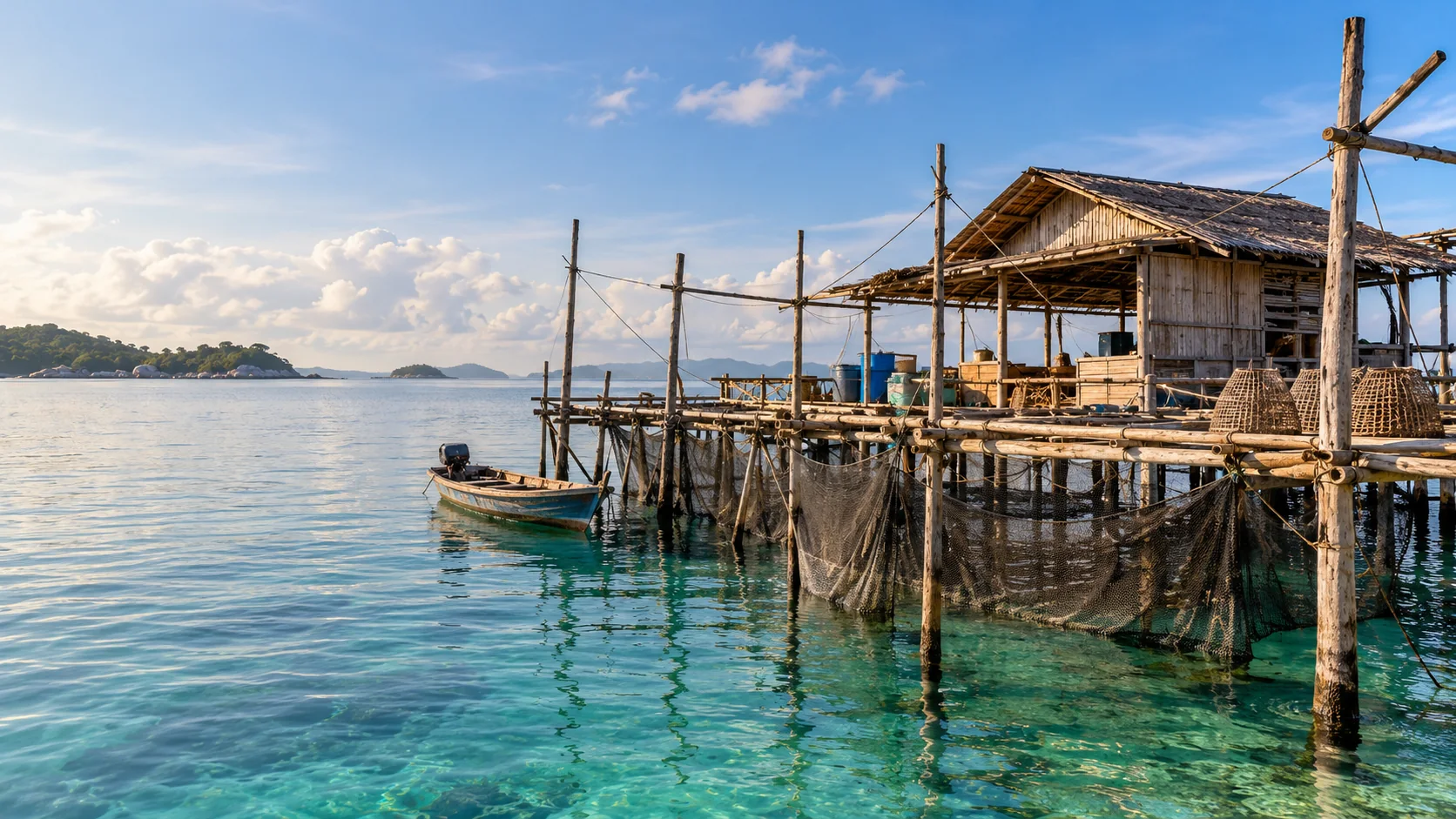 AI-assisted semi-realistic educational illustration; not documentary photography of a specific kelong.
01 / Knowledge pathways
Explore kelong through eight knowledge pathways.
Riau Islands maritime knowledge for the world
Discover Kelong
Forms, components, environments and fishing practices of the Riau Islands.
02History & Heritage
Archival evidence, technological change and respect for community knowledge.
03Science & Technology
Currents, tides, energy, ecology and engineering as learning contexts.
04Sustainable Fisheries
Livelihoods, conservation, capture fisheries and potential aquaculture.
05Learning Hub
Age-specific activities, learning goals, learning evidence and assessment.
06Virtual Laboratory
Interactive diagrams and gateways to virtual experiences and ocean data.
07Resource Library
Curated bibliography, review status, source links and media terms.
08Community & Stories
Educational collaboration and responsible community knowledge protocols.
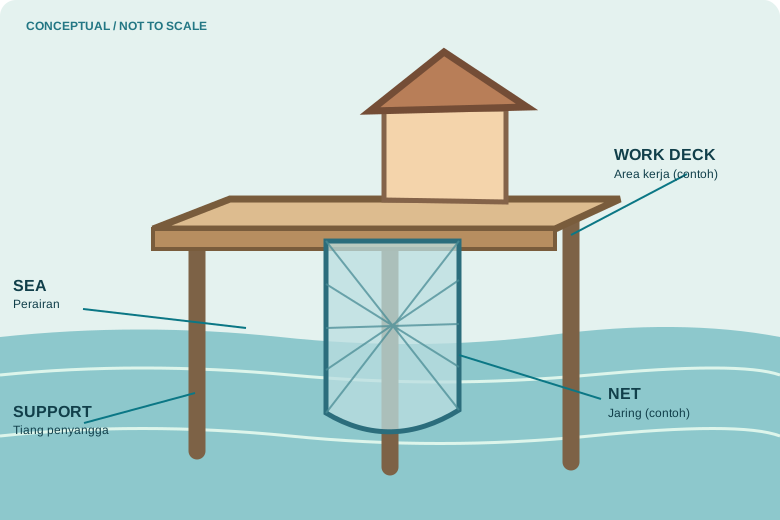 Original teaching diagram: not an engineering drawing or site-specific reconstruction
02 / Primary references
Malay knowledge at the centre of learning.
Local records describe floating and fixed kelong; a Bintan historical study discusses changes in equipment, materials and fisher livelihoods. Each article links to its underlying sources.
- BPNB Kepri (2019)
- Masyarakat Sejarawan Indonesia Kepri
- Monograf pemerintah (katalog 1991)
03 / Featured reading
Learning articles
What is a kelong?
Understanding a kelong as fishing equipment, not merely an offshore structure.
Read the article →History & HeritageReading the traditional kelong monograph
Using a cultural monograph responsibly.
Read the article →Science & TechnologyCurrents, angles and orientation
Fundamental science behind the question of site orientation.
Read the article →Sustainable FisheriesCapture kelong versus aquaculture
An essential distinction for blue-economy education.
Read the article →04 / Learning pathways
Learning by developmental stage.
Adapt these sample activities to school policy, learners’ development and local conditions.
Complete activities, inquiry and assessment.
Each path includes goals, duration, materials, steps, assessment evidence and safety guidance.
Choose a learning path →05 / International virtual experiences
Explore authoritative ocean maps and virtual tours.
Open provider-hosted media. NOAA tours depict US sanctuaries, not the waters of the Riau Islands.
Explore a conceptual model →