BLUE EDUCATION / KELONG LEARNING
Learning pathways
Adapt these sample activities to school policy, learners’ development and local conditions.
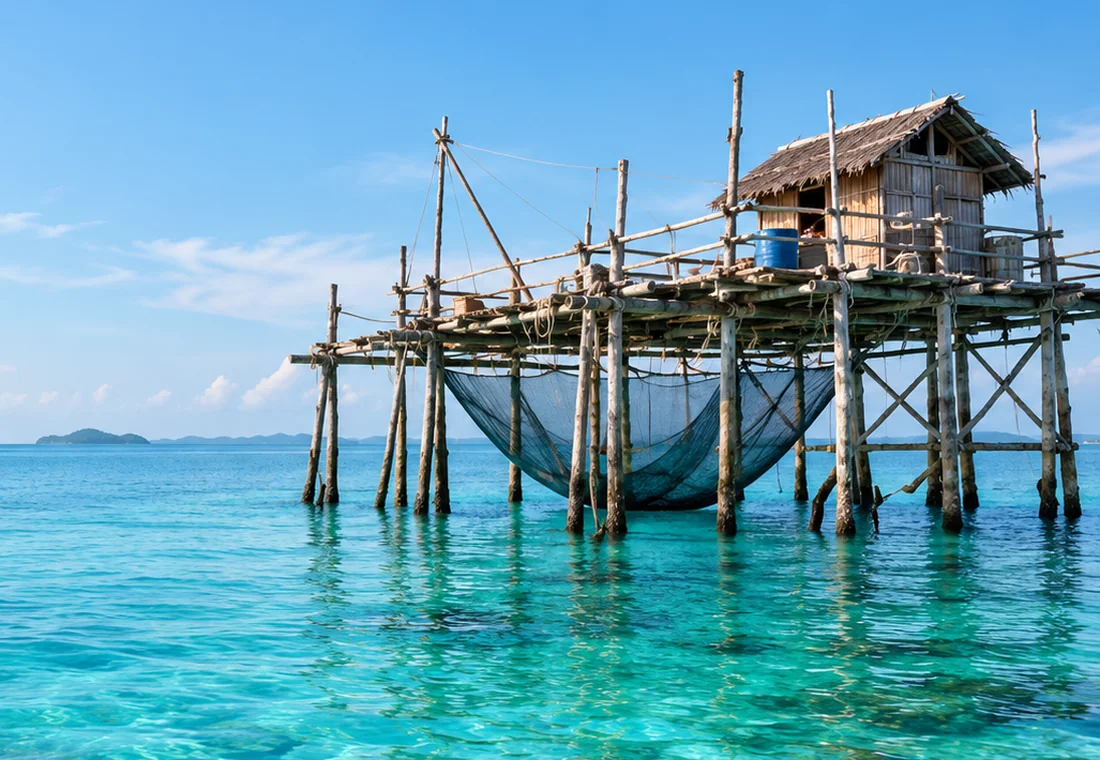
Early years (ages 4–6)
Recognise kelong as fishing equipment used by people and express care for the sea.
30 minutes · Read article ↗02Primary grades 1–3
Identify at least three visible kelong features and explain one function.
45 minutes · Read article ↗03Primary grades 4–6
Explain how current direction relates to a model structure and record observations.
60 minutes · Read article ↗04Lower secondary
Use elementary vector components to explore flow angle and distinguish models from evidence.
90 minutes · Read article ↗05Upper secondary
Formulate a research question and critically evaluate spatial or biodiversity data.
120 minutes · Read article ↗06Vocational secondary
Prepare a risk matrix for a conceptual fisheries system and differentiate capture from farming.
150 minutes · Read article ↗07Higher education
Design participatory kelong research with ethics, triangulation and source transparency.
180 minutes · Read article ↗08Teachers & facilitators
Design curriculum-aligned contextual kelong learning and assessment.
90 minutes · Read article ↗